
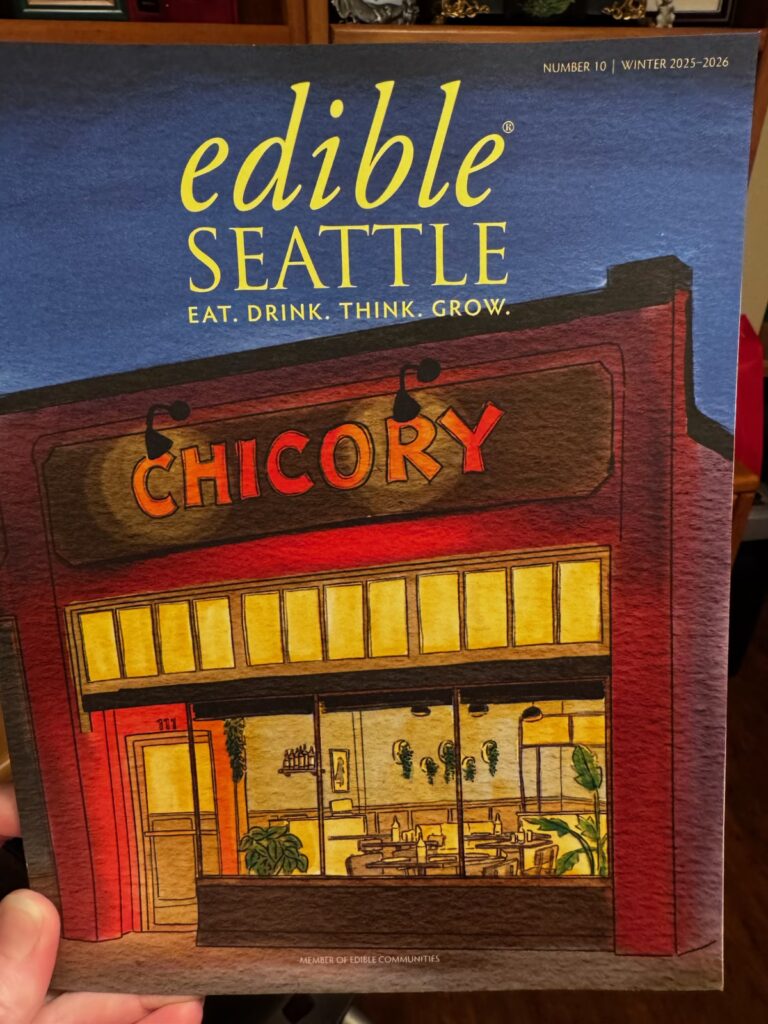
In case you missed it, I had an article in Edible Seattle over the winter. I love this publication and appreciated the chance to write about the cheese business and Seattle’s newest cheese shop.
Here is an excerpt:
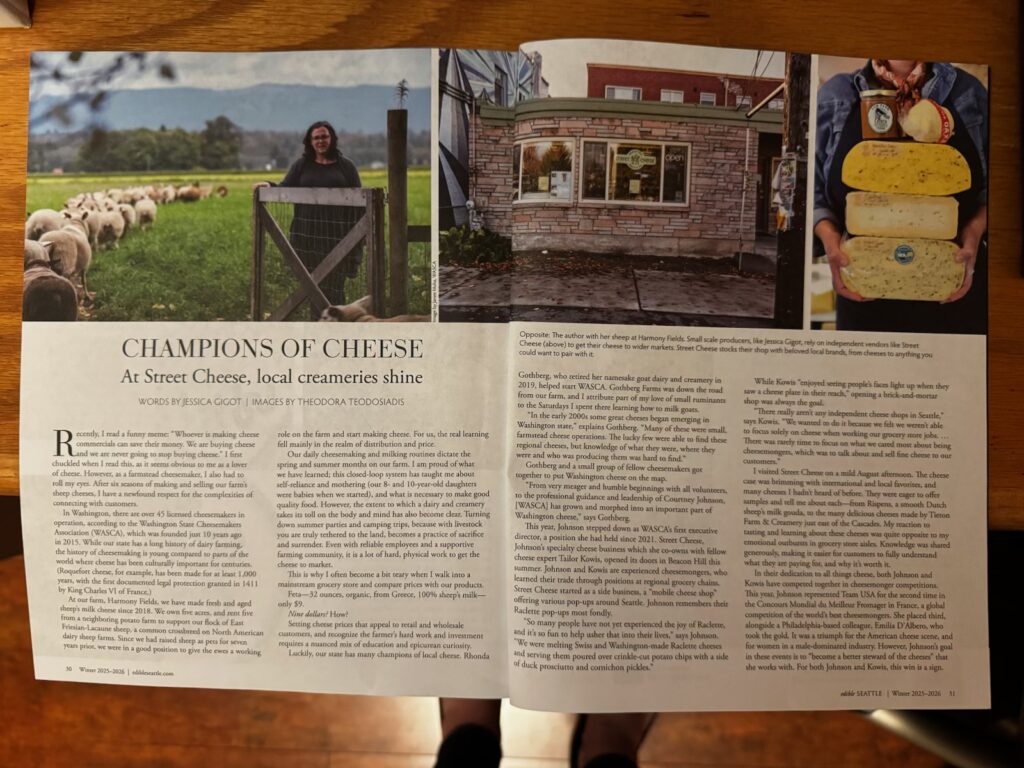
“In Washington, there are over 45 licensed cheesemakers in operation, according to the Washington State Cheesemakers Association (WASCA), which was founded just 10 years ago in 2015. While our state has a long history of dairy farming, the history of cheesemaking is young compared to parts of the world where cheese has been culturally important for centuries. (Roquefort cheese, for example, has been made for at least 1,000 years, with the first documented legal protection granted in 1411 by King Charles VI of France.)
Recently, I read a funny meme: “Whoever is making cheese commercials can save their money. We are buying cheese and we are never going to stop buying cheese.” I first chuckled when I read this, as it seems obvious to me as a lover of cheese. However, as a farmstead cheesemaker, I also had to roll my eyes. After six seasons of making and selling our farm’s sheep cheeses, I have a newfound respect for the complexities of connecting with customers.
At our farm, Harmony Fields, we have made fresh and aged sheep’s milk cheese since 2018. We own five acres, and rent five from a neighboring potato farm to support our flock of East Friesian-Lacaune sheep, a common crossbreed on North American dairy sheep farms. Since we had raised sheep as pets for seven years prior, we were in a good position to give the ewes a working role on the farm and start making cheese. For us, the real learning fell mainly in the realm of distribution and price.
Our daily cheesemaking and milking routines dictate the spring and summer months on our farm. I am proud of what we have learned; this closed-loop system has taught me about self-reliance and mothering (our 8- and 10-year-old daughters were babies when we started), and what is necessary to make good quality food. However, the extent to which a dairy and creamery takes its toll on the body and mind has also become clear. Turning down summer parties and camping trips, because with livestock you are truly tethered to the land, becomes a practice of sacrifice and surrender. Even with reliable employees and a supportive farming community, it is a lot of hard, physical work to get the cheese to market.
This is why I often become a bit teary when I walk into a mainstream grocery store and compare prices with our products.
Feta—32 ounces, organic, from Greece, 100% sheep’s milk—only $9.
Nine dollars? How?’
The article (online and print) came out the week after we had to evacuate the farm (flock and all) due to flood warnings. The rest of that month was a bit of a haze, to say the least. I am revisiting it now and wanted to share again.
Thanks for reading and make sure you get to Street Cheese in Seattle!
Jessica
Article Link: